


THE FOUNDATION OF INTERNATIONAL TRADE: KNOWING SEA FREIGHT

The Foundation of International Trade: Knowing Sea Freight
The flow of commodities across international borders is an essential component of the global economy in today’s linked world. The most popular way to move big loads of cargo over long distances is sea freight, out of all the different forms of transportation. Understanding sea freight is essential whether you’re an importer, exporter, or just interested in how goods get to your neighborhood retailers.
This article explores the fundamentals of maritime freight, its benefits, and how it facilitates global trade.
What is sea freight?
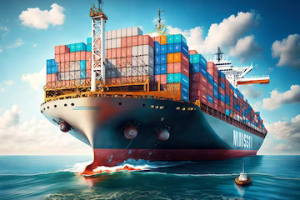
The practice of shipping products over international waters is known as sea freight. This delivery method’s ability to handle a huge number of goods makes it essential for international trade. Almost anything may be transported by sea, from completed commodities like electronics and cars to raw materials like coal, oil, and agricultural produce. Sea freight offers a cost-effective solution for large goods across vast distances, in contrast to air freight, which is quicker but more costly.
Types of Sea freight
Full Container Load (FCL) and Less than Container Load (LCL) are the two main categories of maritime freight.
- Full Container Load (FCL): FCL is the shipping of goods in a full container. This strategy is suitable for firms or people who have enough products to fill a full container. Faster transit times (since there are fewer stops) and increased cargo security are just two benefits of FCL.
- Less than Container Load (LCL): LCL is the practice of combining items, the recommended option for companies with smaller volumes of goods; it provides a more cost-effective option, even though it might take longer than FCL because of the need for consolidation. 2. Consolidation of items from many shippers into a single container is known as less than container load, or LCL. For smaller shipments, this is due to the necessity for consolidation; it might take longer than FCL, but for companies with smaller product volumes, it’s a more cost-effective option.
Benefits of Shipping by Sea
Sea freight is a popular option for international transportation because of its many benefits:
- Effectiveness in terms of cost
In general, shipping large amounts of products by sea is the most economical option. This is particularly true for items that are large or bulky, as air freight would be much more costly. The cost per unit might be comparatively low due to the capacity to carry a large amount simultaneously.
- Capacity
In contrast to other transportation methods like road or air freight, maritime transport possesses the ability to accommodate substantial volumes of goods. Massive cargo vessels are capable of transporting thousands of containers, facilitating the efficient distribution of a wide array of products, ranging from industrial equipment to consumer items.
- Global Reach
The oceans of the world are linked, and nearly every nation is equipped with ports capable of managing sea freight. This extensive network renders maritime shipping the most dependable choice for international commerce, whether the shipment originates from Asia to North America or from Europe to Africa.
- Eco-Consciousness
Although sea freight does not achieve complete carbon neutrality, it is typically more eco-conscious compared to air transport. The emissions generated per ton-mile for sea freight are considerably lower than those associated with air transport, rendering it a more sustainable choice for transporting bulk goods.
- Protection and Assurance
The overwhelming majority of goods shipped by sea reach their destinations without complications. Despite potential risks such as turbulent waters, piracy, and delays at ports, advancements in modern shipping practices have significantly enhanced safety measures and minimized instances of damage or theft.
Disadvantages of Sea Freight
Although sea freight offers numerous benefits, it also presents
several challenges that should be taken into account:
- Extended Transit Times
A significant disadvantage of sea freight is its slower pace compared to air freight. Depending on the specific route, shipments via sea can take several weeks to arrive at their destination. This makes it less suitable for time-sensitive deliveries, although its cost-effectiveness often compensates for this limitation when transporting bulk items.
- Vulnerability to Weather and Port Delays
Sea freight operations can experience delays caused by adverse weather conditions, such as storms or hurricanes, which may disrupt established schedules. Furthermore, congestion at major ports can exacerbate these delays. This unpredictability in timing is a critical factor that shippers must consider in their planning.
- Restricted Accessibility
Although numerous countries possess ports, not all regions can be conveniently reached via sea freight. For instance, remote or landlocked nations may need to depend on alternative transportation methods to move goods to and from ports.
How Sea Freight Functions: A Comprehensive Overview
The freight shipping process encompasses several stages, from the initial booking to the final delivery. Below is a concise outline of the procedure:
- Reservation and Documentation
The initial step involves reserving space with a freight forwarder or shipping company. It is essential to provide information regarding the cargo, including its weight, dimensions, and nature. Additionally, relevant shipping documents, such as bills of lading, invoices, and customs clearance forms, must be prepared.
- Cargo Collection and Transport to the Port
After the documentation is finalized, the goods are collected from the origin point (such as a warehouse or manufacturing facility) and transported to the departure port. This may involve trucking or rail services.
- Loading and Shipping
The cargo is then loaded onto the vessel at the port of departure. Typically, shipping containers are lifted onto container ships using cranes. Once loaded, the vessel sets sail for the destination port.
- Arrival and Unloading
Upon arrival at the destination port, the containers are unloaded. The cargo is subsequently either delivered directly to the buyer or stored in a facility (such as a warehouse or bonded area) until further delivery arrangements are established.
- Customs Clearance and Final Delivery
Prior to delivery, the goods must undergo customs clearance, which includes verifying the necessary documentation and settling any applicable duties and taxes. Following this, the cargo is either collected or delivered to its ultimate destination.
Conclusion
Maritime shipping continues to serve as the foundation of international trade, offering an economical and high-capacity method for transporting goods across seas. Whether you are overseeing a global enterprise or have a general interest in logistics, grasping the complexities of maritime shipping clarifies the process by which products reach consumers from various corners of the globe. Although it may require more time compared to air transport, its affordability and capacity for bulk shipments render it the preferred choice for companies involved in worldwide commerce.


